Jekyll–Lanyon relationship
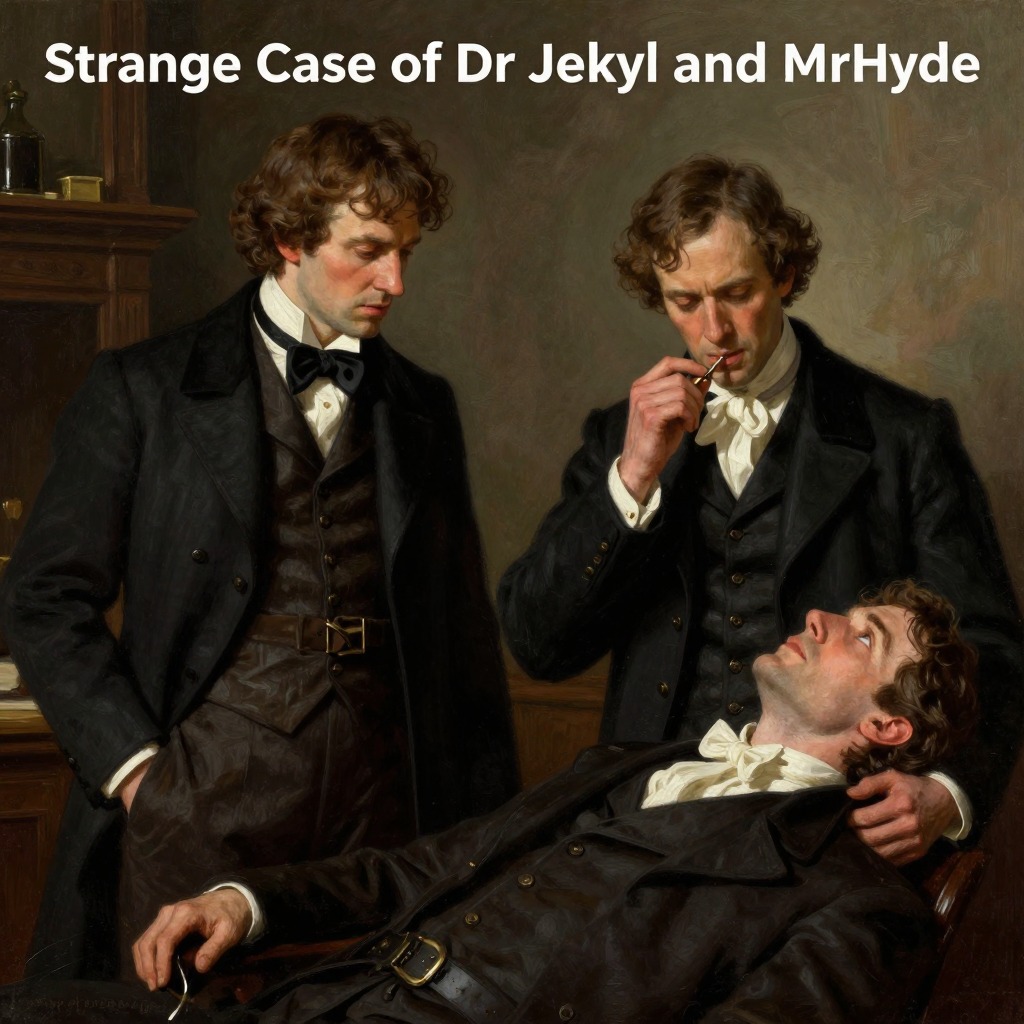
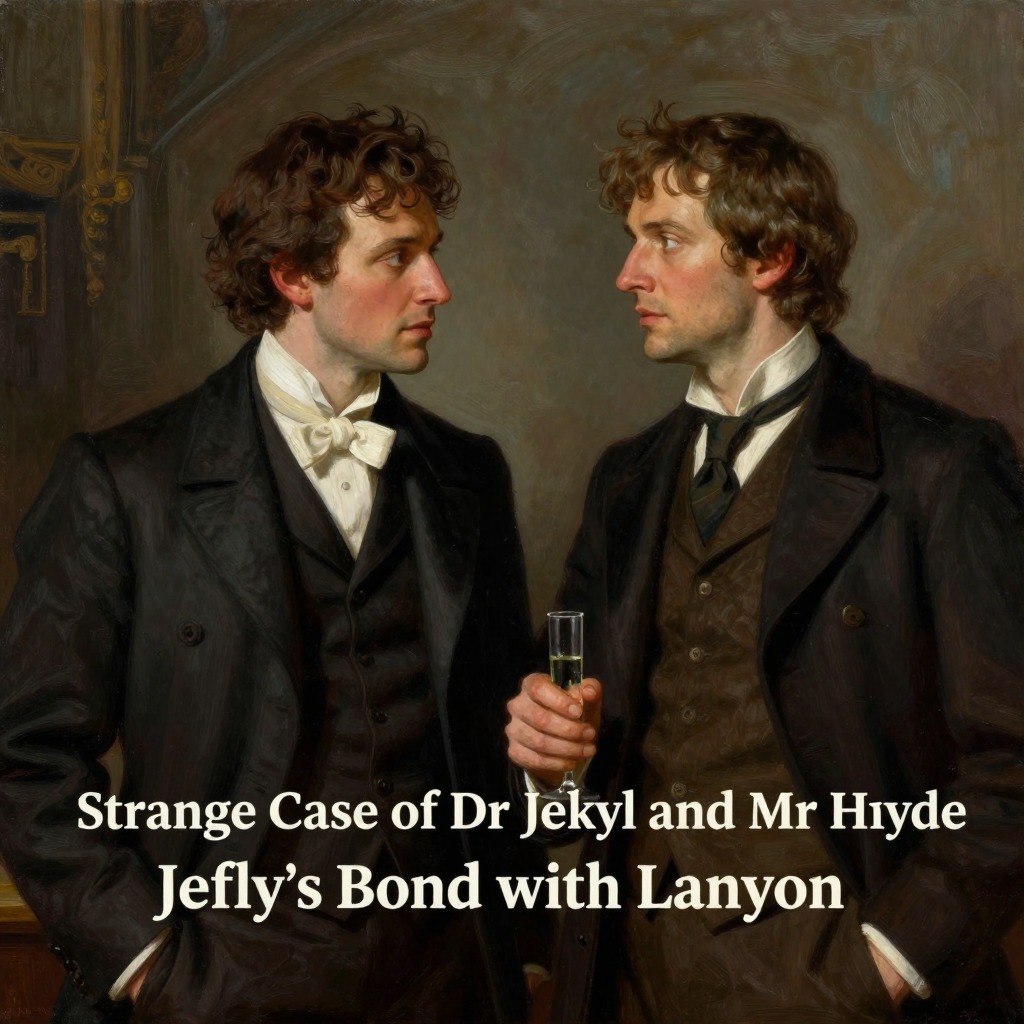
The friendship between Dr. Henry Jekyll and Dr. Hastie Lanyon is one of the novel's most significant relationships, representing a bond of old school and college companionship that is ultimately destroyed by Jekyll's secret experiments and the moral and scientific chasm they open between the two men. Lanyon, a hearty, healthy, dapper, red-faced gentleman with a boisterous and decided manner, and Jekyll, a large, well-made, smooth-faced man of fifty with every mark of capacity and kindness, had been old mates both at school and college, both thorough respectors of themselves and of each other, and men who thoroughly enjoyed each other's company. Yet this long-standing intimacy collapses under the weight of Jekyll's scientific heresies and the horrifying revelation Lanyon is forced to witness.
Scientific Rivalry and Estrangement
The first clear sign of a rift appears when Utterson, seeking information about Hyde, visits Lanyon and learns that the two doctors have grown apart. Lanyon tells Utterson that it is more than ten years since Henry Jekyll became "too fanciful" for him, adding that Jekyll "began to go wrong, wrong in mind." Lanyon dismisses Jekyll's work as "unscientific balderdash," a phrase that makes him flush suddenly purple with anger, and declares that such nonsense "would have estranged Damon and Pythias," the legendary pair of inseparable friends. Jekyll, for his part, returns the contempt, calling Lanyon a "hide-bound pedant" and an "ignorant, blatant pedant" who disapproves of what Jekyll terms his "scientific heresies." This mutual disdain, rooted in fundamentally opposed views of science—Lanyon's material, conventional approach versus Jekyll's mystical and transcendental investigations—has driven the two men apart long before the events of the plot unfold.
The Fatal Encounter and Lanyon's Destruction
The relationship reaches its catastrophic climax when Jekyll, trapped in the body of Hyde after an involuntary transformation in Regent's Park, is forced to turn to Lanyon for help. In a desperate letter, Jekyll appeals to Lanyon as "one of my oldest friends," reminding him that "there was never a day when, if you had said to me, 'Jekyll, my life, my honour, my reason, depend upon you,' I would not have sacrificed my left hand to help you." Lanyon, though suspecting his colleague is insane, feels bound to comply with the urgent request. He retrieves a drawer from Jekyll's cabinet containing a phial of blood-red liquor, some white crystalline salt, and a notebook of experimental records. That night, a small, deformed man—Edward Hyde—arrives at Lanyon's house, mixes the potion, and before Lanyon's eyes drinks it, transforming into Henry Jekyll. The sight is so shattering that Lanyon's soul is "shaken to its roots." He writes that "sleep has left me; the deadliest terror sits by me at all hours of the day and night; and I feel that my days are numbered, and that I must die; and yet I shall die incredulous." The moral turpitude Jekyll unveils, even with tears of penitence, is more than Lanyon can bear.
Irreparable Break and Death
In the aftermath, Lanyon refuses to speak of Jekyll. When Utterson visits him, he is shocked by the change in the doctor's appearance: the rosy man has grown pale, his flesh has fallen away, he is visibly balder and older, and his eyes and manner testify to some deep-seated terror of the mind. Lanyon declares himself a doomed man, saying, "I have had a shock, and I shall never recover." When Utterson mentions Jekyll's illness, Lanyon's face changes and he holds up a trembling hand, saying in a loud, unsteady voice, "I wish to see or hear no more of Dr. Jekyll. I am quite done with that person; and I beg that you will spare me any allusion to one whom I regard as dead." Jekyll, in a letter to Utterson, confirms that the quarrel with Lanyon is incurable, writing, "I do not blame our old friend, but I share his view that we must never meet." A week after this conversation, Lanyon takes to his bed, and in less than a fortnight he is dead. His sealed narrative, which he leaves for Utterson with instructions not to open it until the death or disappearance of Henry Jekyll, becomes the crucial document that, together with Jekyll's own confession, finally unravels the mystery.
Thematic Significance
The Jekyll–Lanyon relationship embodies the novel's central conflict between orthodox science and the dangerous, transcendental inquiries that Jekyll pursues. Lanyon represents the rational, materialist worldview that cannot accommodate the supernatural reality of Jekyll's transformation; his inability to integrate what he has seen destroys him. The friendship's collapse also illustrates the isolating effect of Jekyll's dual existence: the very secret that he hoped would liberate him instead severs his most meaningful human bonds, leaving him alone with Hyde. Lanyon's death is both a consequence of Jekyll's experiments and a foreshadowing of Jekyll's own end—a man destroyed by the knowledge of what he has become.